Invisalign vs Braces UK | Cost, Time and Which Suits You
Dentologi editorial team · 7 November 2026
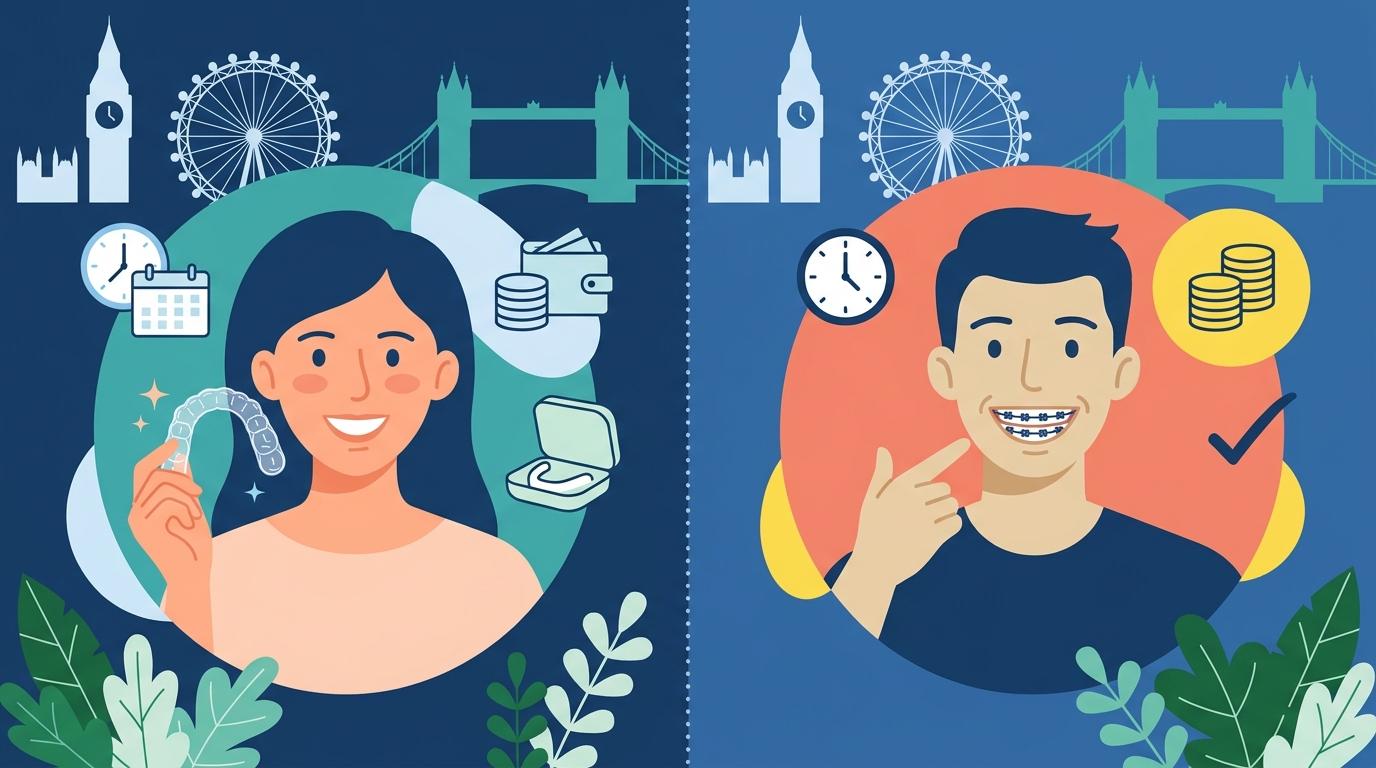
If your teeth have bothered you for years, the decision between Invisalign vs braces in the UK can feel bigger than it looks. You may be weighing a quote of several thousand pounds against a worry that aligners will not fix the problem, or that metal brackets will make you feel self-conscious at work for the next 18 months. Those are reasonable concerns, and the honest answer is that neither option is better for everyone.
This guide compares clear aligners such as Invisalign with fixed braces on cost, treatment time, comfort, results and aftercare, using guidance from the NHS, the British Orthodontic Society and published research. We also explain what your dentist will check first and how to compare quotes. At Dentologi we do not treat patients; we help you find practices that offer the treatment you are considering, so you can ask the right questions before you commit.
Invisalign vs Braces UK
- Invisalign vs braces at a glance
- How each option works
- Cost and ways to pay
- Treatment time and results
- Comfort, daily life and aftercare
- What to know before you start
- How to choose: five steps
- Mini FAQ
Invisalign vs braces at a glance
Both clear aligners and fixed braces move teeth by applying gentle, controlled pressure over months. The difference is how that pressure is delivered and how much control the clinician has. Aligners are a series of removable, clear plastic trays. Fixed braces are brackets bonded to the teeth and joined by a wire that the clinician adjusts.
The table below gives typical private fees and timings in the UK. Prices vary by practice, region, clinician experience and how complex your case is, so treat these as ranges rather than quotes.
| Option | Typical private cost | Typical treatment time | Visibility | Best suited to |
|---|---|---|---|---|
| Invisalign or similar clear aligners | £1,800 to £5,500 | 3 to 18 months | Very discreet | Mild to moderate crowding, spacing and relapse |
| Fixed metal braces | £1,500 to £5,500 | 12 to 24 months | Visible | Simple to complex cases, including bite problems |
| Fixed ceramic (tooth-coloured) braces | £2,000 to £5,500 | 6 to 24 months | Less noticeable | Similar range to metal braces, or short cosmetic cases |
| Lingual braces (behind the teeth) | From around £5,000 | 12 to 24 months | Hidden from the front | People who want fixed control without visible brackets |
Ranges are drawn from aggregated UK practice prices reported by TreatCompare and published price lists such as The Perfect Smile Studios.
How each option works
How Invisalign and other clear aligners work
Your clinician takes a 3D digital scan of your teeth and plans the movement on software. A lab then makes a series of trays, each slightly different from the last. You usually change to a new tray every one to two weeks. Small tooth-coloured bumps called attachments are often bonded to some teeth so the trays can grip and push them in the right direction.
The British Orthodontic Society says aligners need to be worn full time, day and night, except at meal times. In practice most clinicians ask for around 20 to 22 hours a day. If you leave them out, the plan slips and treatment takes longer.
How fixed braces work
Fixed braces are small brackets glued to the front of each tooth, linked by an archwire and held with elastic bands or clips. According to the NHS, fixed braces usually stay in for one to two years, with adjustment appointments roughly every six to eight weeks. Because they are on all the time, you do not need to remember to wear them.
Ceramic and lingual braces
Ceramic braces work in the same way as metal ones but use tooth-coloured or clear brackets. Some short "cosmetic" systems use ceramic brackets to straighten only the front teeth over around six months; these are not designed to correct the bite. Lingual braces are fixed to the back of the teeth, so they are hidden from view but can feel strange on the tongue at first and tend to cost more.
Cost and ways to pay
Invisalign vs braces: cost by case complexity
For mild cases, aligners and fixed braces cost roughly the same. As cases become more complex, fixed braces often work out cheaper, because aligner fees rise with the number of trays and refinements needed.
| Case complexity | Clear aligners | Fixed metal braces | Fixed ceramic braces |
|---|---|---|---|
| Mild (minor crowding or gaps) | £1,800 to £2,500 | £1,500 to £2,500 | £2,000 to £3,000 |
| Moderate | £2,500 to £3,500 | £2,000 to £3,000 | £2,500 to £4,000 |
| Complex (bite correction, severe crowding) | £3,500 to £5,500 | £2,500 to £3,500 | £3,500 to £5,500 |
Source: typical UK private ranges compiled by TreatCompare. Your own quote may be higher or lower, particularly in central London or with a specialist orthodontist.
What a quote should include
Two quotes that look similar can cover very different things. Ask whether the price includes:
- The initial consultation, X-rays and 3D scan
- All aligners or brackets, plus any refinement trays if teeth do not track as planned
- Review appointments and repairs to broken brackets
- Retainers at the end, and how much replacements cost
- Any whitening or composite bonding bundled in, which you may not need
Our Invisalign cost guide and adult braces guide go into these extras in more detail.
Can adults get braces on the NHS?
Rarely. The NHS says free orthodontic treatment is usually limited to under-18s with a clear clinical need, assessed by an orthodontist, and that adults usually need to pay privately. Where NHS treatment is offered, it is normally fixed metal braces rather than aligners. Adults are occasionally treated in hospital when orthodontics is part of wider care, for example alongside jaw surgery.
Paying for treatment
Many practices offer 0% or low-interest finance spread over 12 to 24 months; TreatCompare reports monthly payments commonly falling around £80 to £150. Read the credit agreement carefully and check what happens if you stop treatment early. Dental plans and most dental insurance policies cover routine care rather than adult orthodontics, so do not assume they will contribute. Our guide to dental plans vs dental insurance explains the difference.
Treatment time and results
Invisalign vs braces: which is faster?
For straightforward cases, aligners can be a little quicker. A 2019 review in BMC Oral Health found both approaches effective, with aligner treatment taking around six weeks less on average. A 2022 overview of systematic reviews in Clinical Oral Investigations found the evidence on duration was mixed, with aligners possibly shortening treatment in mild to moderate cases only.
The bigger factor is you. Aligners only work while they are in your mouth, so a plan that should take 12 months can stretch if trays are left out. Fixed braces remove that variable, though missed adjustment appointments also slow progress.
Is Invisalign as effective as braces?
For mild to moderate problems, the research suggests aligners are a reasonable alternative. For more complex movements, fixed braces still have the edge. The reviews above found that braces performed better at:
- Controlling root angle (torque) and rotating stubborn teeth
- Widening the arch and achieving a good bite between upper and lower teeth
- Holding results, with greater relapse reported after aligners
Aligners scored better for gum health and showed less root shortening (resorption), probably because they are removed for cleaning. The British Orthodontic Society notes that severe crowding, cases needing extractions and jaw position problems may need fixed appliances alongside or instead of aligners.
Comfort, daily life and aftercare
Living with aligners
- You take trays out to eat and drink anything other than water, then brush before putting them back.
- Each new set feels tight for a day or two.
- Speech can be slightly affected for the first few days.
- There are no food restrictions, but snacking through the day becomes awkward, which some people find helpful.
Living with fixed braces
- Teeth are often sore for a few days after fitting and each adjustment; the NHS suggests soft food and painkillers can help.
- Hard, sticky and crunchy foods can break brackets, and chewing gum is best avoided.
- Cleaning takes longer. You will need to brush around each bracket and clean under the wire with interdental brushes.
- Sugary food and drink raise the risk of decay and white marks around brackets.
Retainers are not optional
Whichever you choose, teeth tend to drift back once treatment ends. You will need a retainer, either a bonded wire behind the front teeth, a removable clear retainer, or both. Many clinicians now recommend wearing retainers at night long term. Our guide to retainers after braces covers types, costs and care.
What to know before you start
Who each option suits
Clear aligners tend to suit adults with mild to moderate crowding or spacing, teeth that have moved after earlier braces, and people who are confident they will wear trays for most of the day. Fixed braces tend to suit more complex crowding, significant bite problems, cases needing extractions and anyone who would struggle with the discipline of aligners.
When treatment may need to wait
Teeth should not be moved until your mouth is healthy. Treatment may be delayed or adapted if you have:
- Active gum disease or significant bone loss around teeth
- Untreated decay or failing fillings
- Short roots or a history of root resorption
- Jaw joint (TMJ) problems that need assessment first
Possible side effects with either option include temporary discomfort, gum irritation, decay or white spots if cleaning is poor, some root shortening and relapse without retainers.
What the dentist checks first
A proper assessment usually includes a full check-up, X-rays to see roots and bone, a gum assessment, photos and a scan or impressions. The General Dental Council states there is currently no effective substitute for a physical clinical examination before orthodontic treatment. The British Orthodontic Society has also warned against aligners ordered online without in-person care. Only a dentist or orthodontist who has examined you can decide whether a treatment is right for you.
How to choose: five steps
- Get your mouth healthy first. Book a check-up and hygiene visit so any decay or gum problems are treated before straightening starts.
- Ask what problem is being fixed. Is it only the look of the front teeth, or the bite too? The answer often points to aligners or braces.
- Ask for both options. A good clinician will tell you whether aligners or braces would give the more reliable result for your case, and why.
- Compare like-for-like quotes. Check what is included, especially refinements and retainers, and who is responsible for your care. Our checklist for choosing a cosmetic dentist can help.
- Be honest about your habits. If you snack often or know you would leave trays out, fixed braces may get you there faster.
Not sure where to start? Fix My Smile lets you describe what bothers you about your teeth, and we pass your enquiry to suitable practices that can assess you.
Mini FAQ
Is Invisalign cheaper than braces in the UK?
Not usually. For mild cases the prices are similar. For complex cases, fixed metal braces are often cheaper than aligners. Compare full quotes, including retainers, rather than headline prices.
Does Invisalign hurt less than braces?
Many people find aligners more comfortable day to day, with fewer mouth sores and less effect on eating. Both cause a few days of tightness or aching when a new tray or adjustment starts, and research findings on pain are not clear-cut.
Can I switch from aligners to braces if they are not working?
Yes, this sometimes happens if teeth do not track as planned. Ask before you start how the practice handles this and whether any extra cost applies.
Are cheaper online aligners a safe alternative?
The GDC and British Orthodontic Society both stress the need for an in-person examination. Our guide to Invisalign alternatives compares brands and the risks of remote-only treatment.
Conclusion
When it comes to Invisalign vs braces in the UK, the right choice depends on the problem being fixed, your budget and how you live day to day. Aligners are discreet and comfortable and work well for mild to moderate cases if you wear them as directed. Fixed braces offer more control for complex movements and bite problems, often at a lower price for those cases. Either way, start with a full examination and a clear, itemised quote, and plan for retainers from day one.
Sources